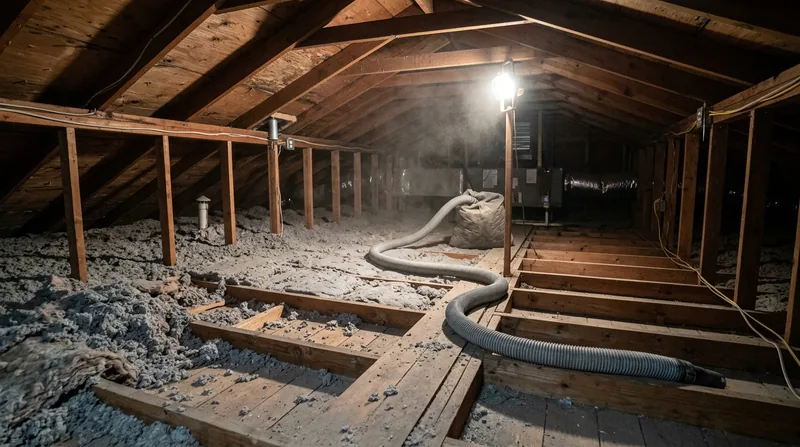




Atlanta sits on the red-clay Piedmont under a dense urban canopy, and most homes here have attics that bake at 130 to 150 degrees Fahrenheit from May through September. Many of those attics still hold blown-in fiberglass and batts that have settled, compacted, or been contaminated by squirrel and raccoon activity over the years. Before any new spray foam insulation goes in, insulation removal in Atlanta has to come first. We vacuum out failed blown-in, cut away deteriorated batts, and remove old spray foam that installers have left behind. The job is unglamorous and most shops will not touch it, but it is the foundation of every retrofit that matters. Once the old insulation is gone and the attic floor is clean, we can see what we are actually working with, and only then does new foam go down with the right thickness and coverage.
Why Insulation Removal Matters in Atlanta's Humid Climate
Atlanta's subtropical humidity and the age of much of its housing stock create a perfect storm for insulation failure. Vented attics in 1950s brick ranches, 1980s two-stories with foyer vaults, and the Craftsman bungalows of Inman Park and Grant Park all collect moisture and pest contamination over decades. Blown-in fiberglass that was never properly installed settles into a thin, ineffective layer. Old spray foam, when applied without proper ventilation or at the wrong temperature, can off-gas and fail to cure correctly. Raccoons and squirrels nest in attics from Alpharetta to Decatur, leaving behind urine and feces that saturate fiberglass and make it worthless. Before a homeowner can enjoy the benefits of attic spray foam insulation, that old material has to come out completely.
- We vacuum out all blown-in fiberglass and mineral wool, leaving the attic floor clean and ready for new foam.
- We remove failed spray foam installations, a job most contractors will not perform because it requires skill and patience.
- We haul away batts, loose fill, and contaminated material, disposing of it properly off site.
- We flag vermiculite for professional testing and never disturb it, protecting you from asbestos exposure risk.
- We inspect the attic structure for moisture, mold conditions, and roof leaks before quoting any new insulation work.
A clean attic floor is the only place a new insulation system can be built to spec. Without removal first, foam coverage will be incomplete and R-values will not match the estimate.
Key info: A 1960s ranch in Smyrna with original blown-in fiberglass that has settled to 2 inches effective depth will lose 40 percent of its R-value. Removal and replacement with closed-cell foam restores the thermal envelope and stops the humidity cycle that drives mold risk in Georgia's climate.
For guidance on what applies at your address, consult the City of Atlanta Building Department or your local jurisdiction's codes.
How Insulation Removal Works: The Atlanta Process
The removal process is straightforward but labor-intensive. We arrive with a commercial-grade vacuum system, containment barriers, and proper respiratory protection. We isolate the work area, vacuum out all loose fill and batts layer by layer, and remove any spray foam that does not meet current code or performance standards. In older homes across the Piedmont, we often find asbestos-containing vermiculite, which we flag for testing by a licensed professional and leave undisturbed. Once the attic is empty, we photograph the condition, check for roof leaks and structural damage, and prepare a scope of work for whatever comes next, whether that is closed-cell spray foam for moisture control or open-cell foam for a cost-effective retrofit.
- We set up containment and mechanical ventilation to control dust and any airborne particles during the work.
- We vacuum all loose insulation into sealed containers and remove it from the attic floor.
- We carefully extract batts and batt fragments, checking for signs of pest activity or moisture damage.
- We cut out and haul away failed spray foam, preserving structural integrity and access to the roof deck.
- We document the attic condition with photos and notes so the next phase is planned on actual site conditions.
- We dispose of all material off site in accordance with local waste regulations.
The work typically takes one to three days depending on attic size, insulation depth, and contamination level. A 1,500 square foot attic in a Brookhaven split-level usually takes two days; a heavily contaminated crawl space or a 3,000 square foot foyer vault in a new construction home may take longer.
Key info: A Kirkwood Craftsman bungalow with lap siding over empty wall cavities and a vented attic full of 1970s blown-in fiberglass required complete removal before wall injection foam retrofit. The old insulation had settled to 2 to 3 inches and was compacted with decades of dust. Removal took one day; injection foam retrofit took another two days.
Removal Methods and What Each Accomplishes
| Approach | Description | Best For |
|---|---|---|
| Blown-in Fiberglass Vacuum | Commercial vacuum system removes all loose fill in one pass, leaving the attic floor bare and clean. | 1950s to 1980s homes with settled or contaminated blown-in insulation; fast, complete removal. |
| Batt and Blanket Removal | Manual extraction of fiberglass or mineral wool batts, checking for pest damage and moisture as we go. | Attics with visible batts, crawl spaces with old insulation, and homes where we need to inspect the cavity. |
| Failed Spray Foam Removal | Careful cutting and extraction of spray foam that did not cure properly, off-gassed, or was applied without ventilation. | Homes with bad previous spray foam jobs; the only way to start fresh and apply foam correctly. |
| Vermiculite Flagging | Identification and documentation of vermiculite-based insulation without disturbance; referral to licensed testing. | Pre-1980 homes in Atlanta where vermiculite was a standard attic fill; safety-first approach. |
Each method is selected based on what we find in the attic. A clean inspection before removal starts ensures we use the right equipment and process for your home.
Insulation Removal Cost in Atlanta: What to Expect
The cost of insulation removal in Atlanta depends on the size of the attic or crawl space, the depth and type of insulation, and whether the material is contaminated. A straightforward removal of blown-in fiberglass from a 1,200 square foot attic typically starts at $950 and moves up based on complexity. Attics with heavy pest contamination, failed spray foam, or vermiculite flags take longer and cost more. Crawl spaces are priced separately because they require different equipment and safety protocols. The best way to know what your job will cost is to get a free estimate on site, where we can measure the area, assess the condition, and give you a firm price before we start.
- Attic size is the primary driver: a 1,500 square foot attic costs more to remove than a 900 square foot attic.
- Insulation depth and type affect removal time: blown-in is faster than batts, and compacted material takes longer to extract.
- Pest contamination and mold conditions may require additional containment or specialized disposal, which adds cost.
- Accessibility matters: attics with poor access or low headroom take longer to work in safely.
- Crawl space removals are quoted separately because they require different ventilation and equipment than attic work.
Once you know the removal cost, you can plan the next phase. Many homeowners choose to proceed immediately with new foam installation, while others prefer to space the work out. Either way, the estimate is free, and we respond within 24 hours at (678) 931-8735. For a detailed breakdown of pricing across all our services, visit our pricing page.
What to Look for When Hiring an Insulation Removal Contractor Near Atlanta
Not every contractor will take on insulation removal. The work is dusty, labor-intensive, and requires proper equipment and disposal protocols. When you are looking for an insulation removal contractor near Atlanta, verify that they carry full insurance that covers liability and workers compensation. Ask to see a Certificate of Insurance before work begins. Request references from recent removal jobs, not just new foam installations, because removal expertise is different from spray foam application. Get at least two or three estimates so you can compare scope, pricing, and the contractor's understanding of what is actually in your attic. Ask whether they will flag vermiculite for testing and leave it undisturbed, and whether they inspect for roof leaks and moisture before quoting new insulation work.
- Verify that the contractor is fully insured and can provide a current Certificate of Insurance upon request.
- Ask for references from removal jobs completed in the last year, not just spray foam installations.
- Get written estimates with R-value and thickness specs so you understand what the next phase will accomplish.
- Confirm that the contractor will inspect the attic for roof leaks, moisture, and structural issues before proposing new insulation.
- Check that the contractor understands local code requirements for thermal barriers and ignition barriers once new foam is applied.
- Verify that the contractor will dispose of all material legally and will not simply dump insulation in a dumpster.
A contractor who takes removal seriously, documents the work, and plans the next phase carefully is the one who will deliver a foam installation that lasts. For a free estimate and to discuss your removal needs, contact us today.
Insulation Removal in Atlanta: Pricing Guide
| Service | Price | Details |
|---|---|---|
| Standard Attic Removal | Starting at $950 | Blown-in fiberglass vacuum and batt removal from 1,000 to 1,500 square foot attic, clean haul-away included |
| Large Attic or Contaminated Removal | Starting at $1,400 | 1,500 to 2,500 square foot attic with pest contamination, settled insulation, or multiple material types requiring careful separation |
| Failed Spray Foam Removal | Starting at $1,200 | Careful cutting and extraction of improperly cured or off-gassed spray foam; labor-intensive work most contractors decline |
| Crawl Space Insulation Removal | Starting at $800 | Removal of batts, loose fill, or failed foam from crawl spaces; requires specialized ventilation and equipment |
| Travel | Included | No separate mileage fee for Atlanta and surrounding service areas; distance does not change the estimate |
| Free Estimate | No cost | Site visit, inspection, and written quote with no obligation to book; 24-hour response time at (678) 931-8735 |
Indicative pricing, the exact cost depends on square footage, finish, and site access. Free personalized estimate within 24h at (678) 931-8735.


