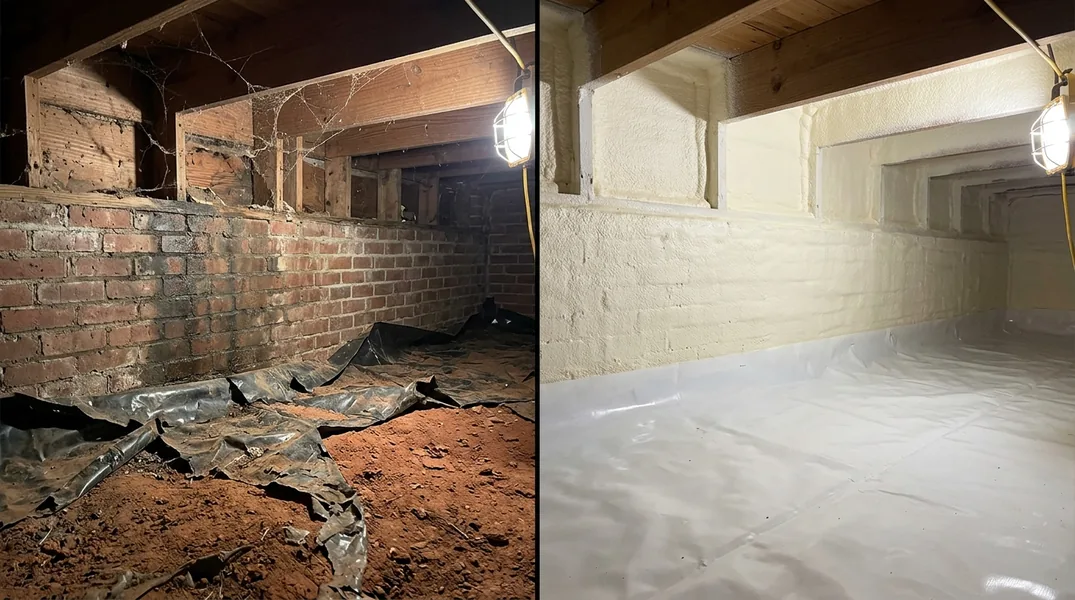
Why Crawl Space Insulation Matters in Atlanta's Climate
If you own a home in Atlanta, you've likely noticed how humidity can feel relentless, especially during summer months. That moisture doesn't just affect your comfort indoors; it seeps into your crawl space and creates an environment where mold, mildew, and wood rot thrive. A properly insulated crawl space acts as a thermal and moisture barrier between your living areas and the ground, reducing the amount of cold, damp air that rises into your home.
Many homeowners overlook their crawl spaces entirely, assuming they're sealed and protected. In reality, crawl spaces in Atlanta homes are often poorly ventilated or inadequately insulated, allowing ground moisture to migrate upward. This leads to higher heating and cooling costs, uncomfortable cold floors, and structural damage over time. Investing in Closed Cell Spray Foam Insulation for your crawl space is one of the most effective ways to address these issues at their source.
Red Clay, Moisture, and Your Crawl Space: The Atlanta Challenge
Atlanta's red clay soil is beautiful but problematic for crawl spaces. This dense, iron-rich clay holds moisture exceptionally well and doesn't drain as quickly as sandy or loamy soils. When heavy rain falls, the clay becomes saturated and releases moisture vapor that rises into your crawl space through capillary action. Even if your crawl space has a vapor barrier on the floor, rising humidity can still penetrate block walls and wooden rim joists, creating the perfect breeding ground for mold and decay.
The challenge intensifies during Atlanta's humid summers. Without proper insulation and moisture control, your crawl space can reach relative humidity levels of 70 to 90 percent, far exceeding the 50 to 60 percent range recommended by building scientists. This excess moisture doesn't stay confined to the crawl space; it migrates into your living areas, making your HVAC system work harder and increasing your energy bills. Closed Cell Spray Foam Insulation creates an impermeable seal that resists moisture infiltration while providing superior R-value, making it the best insulation for crawl spaces in our region.
Crawl Space Spray Foam vs. Traditional Insulation: Why Spray Foam Wins
When homeowners consider crawl space insulation options, they often compare spray foam to fiberglass batts or rigid foam boards. While these alternatives have their place, crawl space spray foam offers distinct advantages in Atlanta's humid environment. Fiberglass absorbs moisture and loses its insulating value when wet, making it a poor choice for spaces prone to humidity. Rigid foam boards can work but require careful sealing at seams and edges, and gaps are common during installation.
Closed Cell Spray Foam Insulation expands as it's applied, filling every crack, crevice, and gap in your crawl space. This complete air seal prevents moisture-laden air from entering your home and stops warm, conditioned air from escaping. The material itself resists moisture absorption and provides an R-value of approximately 6.5 to 7.0 per inch, which is significantly higher than fiberglass. Additionally, spray foam creates a vapor barrier in one application, eliminating the need for separate vapor barriers that can tear or degrade over time.
Understanding Your Termite Bond: What Your Insurance and Warranty Allow
Before you schedule crawl space insulation work, it's essential to understand your termite bond and homeowner's insurance policy. Many Atlanta homeowners have termite bonds that require regular inspections of the crawl space. Some bonds explicitly state that insulation materials cannot be installed on or directly against foundation walls, as this can obscure termite damage and make inspections difficult. This is a critical concern because termites are a real threat in Georgia, and your bond may be voided if installation methods violate the terms.
The good news is that spray foam insulation can be installed in ways that comply with most termite bond requirements. Professional installers understand how to apply spray foam to rim joists and band boards while leaving foundation walls accessible for inspection. Some termite bonds even permit spray foam on walls if it's applied in a manner that doesn't completely seal the crawl space or if periodic inspection access is maintained. Before proceeding with any crawl space insulation project, contact your termite bond provider directly and confirm their requirements. Many local spray foam contractors in Atlanta are familiar with common bond restrictions and can guide you toward compliant solutions. If you're uncertain about your specific situation, Atlanta Spray Foam Insulation can help clarify your options during a free estimate.
Cold Floors Insulation: Solving the Comfort Problem from Below
One of the most noticeable problems caused by inadequate crawl space insulation is cold floors, especially in bedrooms and living areas directly above the crawl space. During winter months, cold air from the crawl space seeps through floor joists and subfloors, making your home feel uncomfortable despite your thermostat being set to a reasonable temperature. You end up running your heating system longer and harder, driving up energy bills while still feeling chilly.
Properly insulating your crawl space directly addresses this issue. By sealing and insulating the rim joists and band boards with spray foam, you create a thermal break that prevents cold air from entering your home. The result is warmer floors, more consistent room temperatures, and lower heating costs. Homeowners often report noticing the difference within days of completing crawl space spray foam installation. If you've been struggling with cold floors despite having adequate attic insulation, your crawl space is likely the culprit. Contact Atlanta Spray Foam Insulation at (678) 931-8735 to discuss how crawl space spray foam can restore comfort to your home.
Crawl Space Spray Foam Cost in Atlanta: What to Budget
The cost of crawl space spray foam insulation varies based on the size of your crawl space, the extent of existing damage, and the specific application method. On average, homeowners in Atlanta spend between 1,500 and 4,000 dollars for a complete crawl space spray foam installation, though larger homes or those requiring extensive moisture remediation may cost more. The investment typically pays for itself through energy savings within five to seven years, and you'll enjoy improved comfort and home durability long after that payoff period.
When evaluating pricing from different contractors, make sure you understand exactly what's included. Some quotes cover only rim joist insulation, while others include band boards, floor joists, and moisture remediation. The cheapest option isn't always the best value; you want a contractor who understands Atlanta's specific climate challenges and termite bond requirements. Atlanta Spray Foam Insulation provides transparent, detailed estimates that break down costs and explain what you're paying for. Reach out for a free estimate and get a clear picture of what your project will cost.
Looking for a professional spray foam insulation contractor in Atlanta? Atlanta Spray Foam Insulation responds fast for all your spray foam insulation needs.
Get a Free Quote