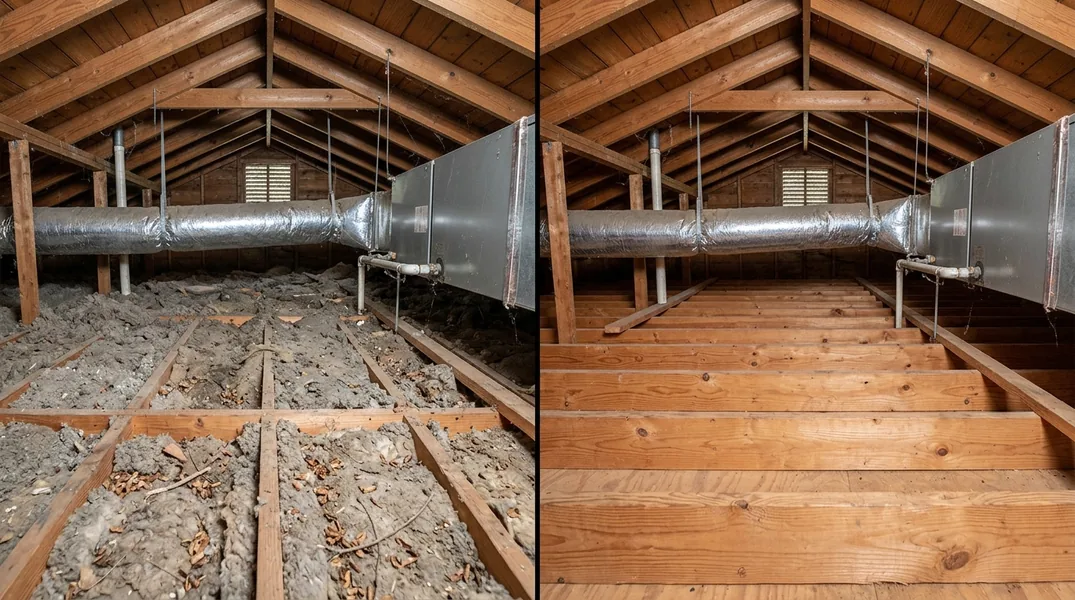
Understanding Spray Foam Insulation: Open-Cell vs Closed-Cell
When it comes to insulating your home in Atlanta, spray foam has become one of the most effective solutions available. But if you're researching your options, you've likely encountered two main types: open-cell and closed-cell spray foam. Understanding the difference between these two is crucial for making an informed decision about your home's energy efficiency and comfort.
At its core, the distinction comes down to how the foam cells are structured. Open-cell spray foam features cells that are not completely enclosed, which makes the foam softer and more flexible. Closed-cell spray foam, on the other hand, has cells that are completely sealed, creating a denser, more rigid material. This fundamental structural difference affects everything from insulation performance to moisture resistance to cost. For homeowners in Atlanta, choosing between these two options depends on your specific needs, budget, and the area of your home you're insulating.
Open-Cell Spray Foam: Benefits and Limitations
Open Cell Spray Foam Insulation is an excellent choice for homeowners seeking a cost-effective insulation solution with solid thermal performance. The open structure of this foam allows air to pass through it, which means it's slightly more permeable to moisture and air movement than its closed-cell counterpart. This characteristic actually makes it ideal for certain applications, particularly in attics where breathability can help manage humidity levels naturally.
One of the primary advantages of open-cell foam is its affordability. It typically costs significantly less per board foot than closed-cell foam, making it an attractive option for budget-conscious homeowners. Additionally, open-cell foam provides excellent sound dampening properties, which can help reduce noise transmission through your walls and ceilings. The foam also expands more during application, allowing it to fill irregular spaces and cavities more thoroughly. However, open-cell foam does have lower density and is more susceptible to water damage, so it's not recommended for areas prone to moisture or below-grade applications.
Closed-Cell Spray Foam: Superior Performance and Protection
Closed Cell Spray Foam Insulation represents the premium option in spray foam insulation. The dense, sealed cell structure creates a vapor barrier and provides exceptional moisture resistance, making it ideal for areas that may be exposed to water or high humidity. This characteristic alone makes closed-cell foam particularly valuable in climates like Atlanta's, where summer humidity can be intense and attic moisture can become a serious concern.
The structural integrity of closed-cell foam is significantly superior to open-cell varieties. It's much denser and more rigid, which means it can actually contribute to the structural strength of your home. This added rigidity also means the foam won't settle or compress over time like some other insulation materials. Closed-cell foam also acts as an excellent air barrier, preventing air infiltration and exfiltration more effectively than open-cell foam. These superior characteristics come with a higher price tag, but many homeowners find the long-term benefits justify the investment.
Closed-Cell Spray Foam R-Value: Understanding Insulation Performance
When evaluating insulation effectiveness, R-value is the metric that matters most. Closed-cell spray foam R-value typically ranges from R-6 to R-7 per inch, meaning a 5.5-inch application achieves approximately R-33 to R-38.5. This high performance per inch is one of the key reasons closed-cell foam is preferred for applications where space is limited, such as cathedral ceilings or wall cavities where thicker insulation isn't feasible.
In comparison, open-cell spray foam delivers an R-value of approximately R-3.5 to R-3.6 per inch. This means you'd need roughly twice the thickness of open-cell foam to achieve the same R-value as closed-cell. For Attic Spray Foam Insulation in Atlanta, where you typically have more room to work with, open-cell foam can still achieve excellent results. A 10-inch application of open-cell foam would provide approximately R-35 to R-36, which meets or exceeds most building code requirements for attic insulation in Georgia. The choice between these options often comes down to available space, moisture concerns, and your overall insulation goals.
Attic Spray Foam Insulation Cost in Atlanta: What to Budget
Understanding the financial investment required for spray foam insulation is essential for homeowners planning their upgrades. The pricing for spray foam insulation varies considerably based on the type you choose, the size of your attic, and local labor costs. Open-cell spray foam typically costs between $0.50 and $1.00 per board foot installed, while closed-cell spray foam generally ranges from $1.50 to $2.50 per board foot or higher, depending on the specific product and application requirements.
For a typical 1,500 square foot attic in Atlanta, you might expect to spend anywhere from $3,000 to $8,000 or more for a complete spray foam insulation project, with the final cost depending heavily on which type you select. While closed-cell foam represents a larger upfront investment, many homeowners recoup the additional expense through energy savings over time, particularly in the hot, humid Atlanta climate where cooling costs can be substantial. It's important to get quotes from qualified local contractors who can assess your specific situation. Atlanta Spray Foam Insulation can provide you with a detailed free estimate tailored to your home's needs and your budget constraints.
Which Type is Right for Your Atlanta Home?
Choosing between open-cell and closed-cell spray foam ultimately depends on your specific circumstances and priorities. If you're primarily concerned with cost and your attic has adequate space for thicker insulation, open-cell foam offers an excellent value proposition. It performs well for thermal insulation, provides good sound dampening, and is environmentally friendly. However, if moisture protection is a concern, if you want maximum R-value in minimal space, or if you're looking for a product that will provide structural reinforcement to your home, closed-cell foam is the superior choice despite its higher cost.
For most Atlanta homeowners, the decision often hinges on the specific area being insulated and budget considerations. Attic applications frequently work well with open-cell foam, while wall cavities and areas prone to moisture benefit more from closed-cell options. The humid Atlanta climate does favor closed-cell foam's superior moisture resistance, but open-cell foam can still perform excellently when properly installed. The best approach is to consult with experienced professionals who understand Atlanta's unique climate challenges. Contact Atlanta Spray Foam Insulation at (678) 931-8735 to discuss your project with experts who can recommend the ideal solution for your home's specific needs and help you maximize your insulation investment.
Looking for a professional spray foam insulation contractor in Atlanta? Atlanta Spray Foam Insulation responds fast for all your spray foam insulation needs.
Get a Free Quote