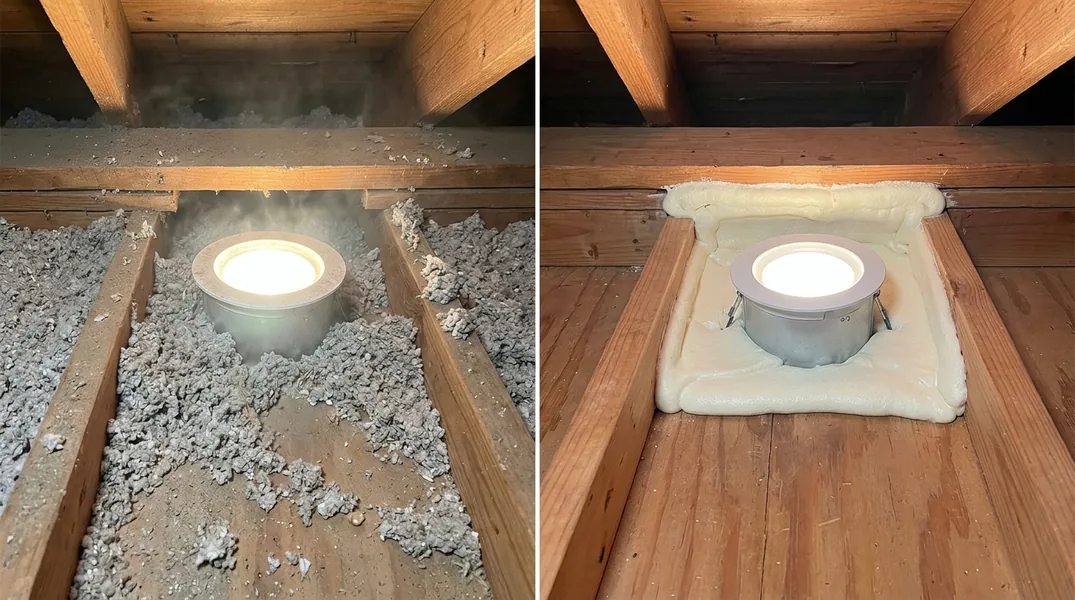
The Honest Truth About Spray Foam vs Blown-In Insulation
When homeowners in Atlanta start researching attic insulation, they quickly discover two dominant options: spray foam and blown-in insulation. Both are legitimate solutions, and both have real advantages. But here's what most contractors won't tell you: the best choice isn't always the most expensive one, and sometimes the honest answer is that your attic doesn't need a complete overhaul.
At Atlanta Spray Foam Insulation, we believe in straightforward advice. We've evaluated thousands of attics across the region, and we've learned that the decision between spray foam vs blown-in insulation depends on your specific situation, not on what generates the biggest invoice. If your attic already has insulation and you're losing heat, a simple top-up might be exactly what you need. If you're dealing with moisture, air leaks, or structural issues, that's when a more comprehensive solution becomes necessary.
Understanding Blown-In Insulation: The Traditional Choice
Blown-in insulation has been the standard attic solution for decades, and for good reason. This material, typically made from fiberglass, cellulose, or mineral wool, is installed by blowing it into the attic space using specialized equipment. The process is relatively quick, non-invasive, and affordable. If your Atlanta home was built in the 1980s or later and still has decent attic access, blown-in insulation often performs well.
The real strength of blown-in insulation lies in its cost-effectiveness and ease of installation. When you're simply adding more insulation to an existing layer, blown-in material fills gaps and settles into place without requiring structural changes. However, blown-in insulation has limitations. It doesn't create an air seal like spray foam does. Over time, it can settle and lose some effectiveness. It also absorbs moisture, which in humid climates like Atlanta can become a concern if your attic isn't properly ventilated.
Spray Foam Insulation: Premium Performance and Air Sealing
Attic Spray Foam Insulation offers something blown-in materials cannot: simultaneous insulation and air sealing. When spray foam is applied, it expands to fill every cavity, crack, and void in your attic. This creates a continuous thermal and air barrier that dramatically reduces heat loss and prevents conditioned air from escaping. For homeowners with older attics, air leaks around ductwork, or structural irregularities, spray foam delivers measurable performance improvements.
There are two main types to consider. Closed Cell Spray Foam Insulation has a higher R-value per inch, provides superior moisture resistance, and adds structural rigidity to your roof deck. Open Cell Spray Foam Insulation is less dense, more affordable than closed-cell, and still provides excellent air sealing while allowing some moisture permeability, which can be beneficial in certain attic conditions. The choice between them depends on your attic's moisture profile and your budget.
Spray Foam vs Fiberglass vs Cellulose: A Direct Comparison
Let's break down how these three materials stack up against each other. Fiberglass is the most common blown-in option because it's inexpensive and has a decent R-value (around R-3.2 per inch). Cellulose, made from recycled paper, offers slightly better insulating value (R-3.6 per inch) and better sound dampening, but it's moisture-sensitive and requires careful installation. Spray foam, whether open or closed-cell, delivers R-values between R-3.6 and R-7 per inch depending on type, plus the critical advantage of air sealing.
The real difference emerges when you consider air leakage. A blown-in material, no matter how thick, cannot seal the gaps around electrical boxes, ductwork penetrations, or structural seams. Your attic might be well-insulated, but warm air still escapes through these pathways. Spray foam eliminates this problem. For homeowners who have already tried blown-in insulation and still experience temperature swings or high utility bills, spray foam often reveals the underlying issue: air leakage that blown-in material never addressed.
When a Top-Up Is the Honest Answer
Here's where we separate ourselves from contractors who always recommend a complete replacement. If your attic currently has 6 inches of fiberglass and your local code recommends R-38 (which requires about 12 inches of fiberglass), adding another 6 inches of blown-in material is a legitimate, cost-effective solution. You'll gain the insulation value you need without the expense of removing the old material and starting fresh.
A top-up makes sense when your existing insulation is still in good condition, you don't have moisture problems, your attic is properly ventilated, and air sealing isn't the primary issue. In these cases, blown-in insulation delivers excellent value for your money. We've evaluated many Atlanta homes where this straightforward approach was the right answer, and we recommend it without hesitation because it's genuinely the best solution for that particular situation.
Attic Spray Foam Insulation Cost in Atlanta: What to Budget
Cost is often the deciding factor, so let's be transparent about pricing. Blown-in insulation typically costs between $0.60 and $1.50 per square foot, depending on material type and depth. A 1,500-square-foot attic might cost $900 to $2,250 to top up with blown-in material. Spray foam, by contrast, typically ranges from $1.50 to $3.00 per square foot, putting a full attic conversion at $2,250 to $4,500.
The premium you pay for spray foam reflects its superior performance: better R-value, air sealing, moisture resistance, and longevity. Open-cell spray foam costs less than closed-cell but still outperforms blown-in on air sealing. If your primary goal is adding R-value to an already-sealed attic, blown-in is more economical. If you're addressing air leaks, moisture concerns, or seeking maximum long-term performance, spray foam's higher cost delivers measurable returns through lower energy bills and better comfort. We're happy to discuss your specific situation and help you understand what approach makes financial sense for your home. Contact us at (678) 931-8735 or request a free estimate to see what your attic actually needs.
Making Your Decision: Key Questions to Ask
Before committing to either option, consider these practical questions. First, what's your attic's current condition? If it's damp, moldy, or has evidence of air leakage around ducts and penetrations, spray foam is likely necessary. Second, how old is your existing insulation? Material more than 20 years old may have settled significantly, making a replacement more effective than a top-up. Third, are you experiencing comfort issues or high heating and cooling bills? This suggests air sealing problems that blown-in material won't solve.
Fourth, what's your timeline and budget? Blown-in installation takes a day or two; spray foam takes longer and costs more upfront. Finally, are you planning to stay in your home long-term? Spray foam's durability and performance justify the investment if you'll benefit from it for decades. If you're selling within five years, a cost-effective top-up might be the smarter choice. These aren't rhetorical questions. They're the foundation of honest advice, and they're exactly what we explore when you reach out to Atlanta Spray Foam Insulation.
Looking for a professional spray foam insulation contractor in Atlanta? Atlanta Spray Foam Insulation responds fast for all your spray foam insulation needs.
Get a Free Quote